Why Australia Is Broken: Inflation, Migration & Political Lies - E2

Australia is broken, and the people in power did it. In this explosive episode of Emeka Unscripted, Emeka Edwin-Nweze exposes how inflation, failed migration policy, and political deception have pushed Australia to the brink. From the Reserve Bank’s rate-rise obsession to government spin and media bias, this is the truth about why Australians feel like they’re working harder and getting nowhere.

Emeka connects the dots between policy, politics, and your pocket:

• How inflation became the government’s favourite cover-up for incompetence.

• Why migration without planning has turned housing into a survival game.

• How political lies and lazy economics keep families trapped in rising costs.

• The reason the Reserve Bank of Australia keeps punishing workers instead of fixing the system.

• And why cancel culture and political correctness are used to silence anyone who questions it.

This isn’t Left or Right, it’s truth versus theatre. Australia deserves accountability, not headlines.

Transcript

Welcome to Emeka Unscripted. This is a space for bold thinking, honest reflections, and raw conversations. It is not just a podcast. It's a platform where I will be speaking openly about political and business decisions that shape our nation and our continent because Australia is a big place if you haven't noticed. It's a place where broken systems are challenged, where ideologies that are weak will be exposed for what they are, where those in power are reminded of what they were elected to do because they seem to forget. Or maybe they do it intentionally and they just don't care. But we will expose and explore that together.

You see, here we will challenge ideas. We will tear down what doesn't serve people or progress. We will rebuild what matters. and we will return the conversation back to sanity. This platform for me, you see, it was born out of a realization and maybe a deep sense that too many people simply don't understand how decisions are made in parliament or in boardrooms. How does decision impact the food on their table, the roof over their head, and the future of their children? And you see that's the important part, the future of their children.

There's a gap in education. Not the degree kind, but practical knowledge. Knowledge that connects the dot between government decisions, policies, business, economics, and everyday life. Knowledge that shows how perhaps political decisions affect the price, services, wages, and life in general itself. This ignorance can no longer be allowed to continue. So here we will build knowledge.

Through knowledge comes enlightenment. Not the soft kind. Not the airy-fairy kind that we see on the internet. But the kind that teaches you to think for yourself. That is the kind of enlightenment we're talking about here. To see beyond the media headlines. To see beyond the loudest voices. To question what you have been told. That kind of enlightenment.

The enlightenment that we're talking about needs to go from enlightenment to action. The kind of action we're talking about is not the one that will wait for permission. This is action that doesn't bend to trends or hashtags. This will be action that is rooted in truth. In responsibility. Because if we're not building a better future for our children, then what are we doing? And maybe, just maybe, these conversations will not only educate and enlighten, but will inspire the courage to act. The kind of courage that leads to the kind of action that leads to real change.

I'm Emeka and this is Emeka Unscripted.

Let's get one thing straight. They didn't murder Charlie Kirk because he was a fascist as they like to say. They didn't murder him because he was inciting violence. They didn't murder him because he was a threat to democracy (as the nonsense keeps floating around).

They murdered him simply because he was effective. Charlie Kirk made a powerful compelling argument all the time. Every time. He was in a public space arguing with those morons. (Perhaps, maybe, we shouldn't call them that, but we'll see. As time goes on, they continue to reveal themselves to be exactly that.) So, he challenged the mainstream. Not with rage. Not with riots (like they have seemed to be doing in very recent history). But with reason. He wasn't afraid to speak up. He did so calmly. He did so directly. And he did so boldly. And in the cultural moment, that kind of cla clarity is a threat to those who rely on chaos and confusion.

He didn't preach hate contrary to some narratives that keep floating around. He didn't advocate for violence. Not once. He did what he did. What he did was challenge ideas. He stayed his ground. For that they hated him.

And I can't lie, this hits very close to home for me, because in just the last episode I shared my own experience when I was being targeted by some mob. Not for what I did, but for what I said. People who couldn't handle a different perspective tried to silence me. They twisted my words and they attacked my character. Not because I was dangerous (although some claimed that) but because I was confident in my convictions. Because I stood for something.

Charlie and I shared more than just the willingness to speak out. We were actually pretty close in age. We both have young families. Wives and children waiting at home after every podcast, after every public appearance, after every interaction. We want to go home to be happy with, to see, our families. And we both, most importantly, shared the same Christian faith. A faith that actually teaches us to speak truth and love. Even when it is unpopular. A faith that reminds us every life is sacred. Even the life of someone who disagrees with you. That's what made this very difficult. In fact, that's what makes this heartbreaking for me. He was a husband. He was a father. A believer. And they killed him.

But this is not just about Charlie. This is about what happens when society becomes so hostile to disagreements. So addicted to outrage. So fragile in their thinking. There’s lots to say about what it is, but let's move on perhaps.

Persuasion itself seems to have become punishable. If you can't argue back and you disagree with what I'm saying, you must punish me somehow outside of just arguing your point. When people can't argue, they will cancel you. And that's what I saw. When cancelelling isn't enough, they will escalate in whatever means is necessary, like I saw. That's the direction we are heading as a society, and if we don't course correct, it won't stop with Charlie. Unfortunately, it wouldn't stop with me either (being attacked in the public space, the town square). It wouldn't stop at the next conservative or centrist or liberal or religious leader. It will eventually touch everyone.

So this is a wakeup call, because when society rewards censorship and punishes truth, it doesn't protect freedom. It destroys the very foundation that freedom stands on.

While I'm both shocked and I was quite angry about the whole event that is taking place, I'm also reminded that nothing is truly new under the sun. You see, the enemy always plays his hand way too early. He got excited when thinking that he had won and maybe even cheered when Jesus went to the cross, too, didn't he? But then 3 days later, the grave was empty, and that was that. So, no. No, this won't lead to the end. This is not the end for Charlie as we saw in the celebrations of his life that happened last weekend. If anything, watch what happens now. When someone like this is taken down, what happens next is that 50 more at least will rise and take his place. Now, there will be a generation of men and women who won't back down, who we've seen already starting, already knowing what it costs to stand. These young people have already seen it and they will choose to stand anyway.

See, as for me, I've counted the cost and I am ready. I'm ready for whatever may come, because the truth is it's not just worth saying, it is worth suffering for. And in the middle of my grief, in the middle of my anger, on the day that Charlie was murdered, I opened my Bible that morning and I heard heaven itself speak to me. And this is what it read: “Therefore, we are always confident and know that as long as we are at home in the body, we are away from the Lord. For we live by faith, not by sight. We are confident, I say, and would prefer to be away from the body and at home with the Lord.” This is 2 Corinthians 5:6-8. Charlie's home now. And for those of us that are still here, we do not shrink back. We move forward. We speak up. We stand firm because darkness doesn't win. It never has and it never will.

Now, let's move on to the conversation for today. I want to contextualize something for you, maybe build a bit of a foundation for a lot of the political-type conversations we're going to be having on this platform.

We have this system in Australia - the democratic system - where you have the government that is currently elected to do the thing that they've been elected to do for their people. Then we have this other party or this other group, and we typically refer to them as the opposition or the coalition, whatever your terminology might be. But effectively, this is the way the country is governed.

We're talking about Australia, right? So if you don't know, this is how your education starts.

You have the guys who are sitting/governing and they get there by being majority elected. And then you have the other mob. They're not majority elected, but they are the biggest. That’s usually formed by not just one, but usually two, maybe even three parties. Here is a simple job that belongs to these guys in very, very simple terms. (And yes, I know some of you might think it's far more complex than that, but calm down. I know that. Simple terms.)

The guys who are sitting, their job is to go out to the big bad world (that is Australia) to their local constituents, hear what their constituents want and what they need and how they feel like life needs to go for them, and then they take that to parliament with their colleagues that have also been elected by other constituents. They get together in the room and they talk about what is most important. What are the trends? What are the most common things across the constituents across the country? And then they decide, “okay well these five, six, ten matters matter, and we need to discuss it further and then we need to come up with some rules, some laws, some policies, and then we need to maybe even vote on it if it's a law that needs to be enacted” and whatever else. Now, that's what they're fundamentally meant to do.

And if they do that well, then we have a very good governing system, which means that over time, they continue to hear their constituents. They continue to action things and they build on that until we get to a point where we have a stable country that provides for the needs of its people and a government that serves its people.

Well, that's the basic theory.

What we also have is the opposition party (and by the way, we pay both people to do what we're talking about here). Their job is to sit on the sidelines, keep their eyes on the sitting or elected government, and anytime they start to veer out from any one of the things I listed before, (they're not listening to their constituents, they're not paying attention to what is supposed to be, they're not following through on election promises), the opposition stands up and says, "Hey, listen. Uh, that's not cool. That's not what you've been elected to do. You made some promises. You have some things that you need to do. You need to focus and you need to get those done.” In theory, that's the gig.

But we have a problem in Australia. Fundamentally, this becomes the issue often in democratic spaces. The problem is the election cycles about every four years. And really, there's only two parties that exist. Now, there are other little independent groups and they're ones that are rising. But let's face it, unless those independents get voted in or more of the smaller parties, let's say the Pauline Hansen, One Nation. (That's right - I'm giving you a shout out, Pauline Hansen. I kind of like you, even though they say you're racist. Don't know what that's about, but maybe we can talk about it at some point.) But here's the thing: unless those guys get elected - more of them that can actually stand and do the job of being an opposition party to go, “we're holding you accountable” - it doesn't really happen and often you will wonder why. I think you you should wonder why do we not have the opposition holding accountable the guys who are elected.

Because let's face it. Clearly, it seems it has been for a long time your voice is not being heard when you say, “we can all see the things that are happening in our spaces and we all have an issue with it. And we have these members that we talk to and we expect them to deliver on an outcome but it doesn't happen.” The question is why? Well, they should be. We'll dig into that over time - why the elected government don't.

But then let's talk about why the opposition don't hold them accountable. It's really simple. I said before, election happens every four years approximately. What happens is, every four years, it's probably going to swap over. Yeah. The opposition will probably come and sit down in place and they will now be the elected governing body. There is a fundamental flaw with this. A problem. Because if the job of the opposition is to hold the sitting government accountable for a period of time while they serve the people. But they notice that they get to do all these things that build them more power and more money, more wealth, and it's all pretty underhanded but it makes them well wealthy. It makes them more powerful. The opposition starts looking at this and they start thinking if we actually hold them accountable there's a good chance that they (when it's our turn) they will do the same for us and they will block us from doing the things that we want to do to enrich our pockets and make us more powerful. So maybe we should sit on the sidelines and not really do it. We should pretend like we're doing it, obviously, but we shouldn't really do it because that's not going to be good for us four years from now. Do you see the problem?

If a father was playing a game with their child and the child is throwing tantrums because they don't know the rules (or they don't want to play according to the rule) and the dad's position is to go, “well, you know I'm just going to let him play the game however he wants and we'll just do that. That’s how it works.” That child's never going to learn. The father is never going to learn how to actually get through the job of being a father by teaching the child how to actually play according to the the rules. That's fundamentally what we have happening. And perhaps maybe the father is even thinking, “I shouldn't really hold him accountable because if I do, chances are that in four years he's going to grow up and hold me accountable for all the stupid stuff that I do.” That's kind of the irony of what we have happening.

So you see, we don't really have a government system that is actually working, which is why we have all the problems that we do. And you know what these people do? They go, "I think we should distract these people ‘cause they don't know any better. If we distract them by doing stupid things like saying, ‘Oh, I wonder if we recognize Palestine as a state’ there'll be controversies. We're aware of it. There'll be people that fundamentally disagree with it. Maybe a lot of people. We're aware of that. There will be some that agree with it. But maybe they will just fight each other and we will be somewhere in the middle and nobody will give a toss looking at what we're actually doing."

What they do to you is they constantly play this game of distraction, and they distract you from what is truly important so that you don't see what the nonsense is that they're doing. And every so often if you get pretty close, the opposition does a job by not actually holding them accountable, which is what you're paying them to do. They throw in more distraction there.

Yeah, that's actually how it works. So if you didn't know, now you know.

Have you ever noticed how every time you get a little pay rise, (because let's face it, no one's getting a big jump these days. Little pay rise for the middle guys anyway, they are summed that up, but we'll talk about them another day) the universe seems to just laugh and say, "Nice try, mate." You know the week that you finally think you get to breathe, because maybe you can finally afford that steak again. And boom. Coles and Woolies and their compadres double the price of steak. So no steak for you. I swear it's like they get a push notification from the company straight from your workplace maybe your head of HR before your salary even hits your account. The prices on the price tag have already doubled.

Also, what is with the thing where Coles tells you prices are down. They slap a yellow - is it yellow? I don't know whether it's Coles or Woolworths. Who knows? They slap a new sticker on it that says “SALE.” And then, have you ever tried lifting that sticker, (I think everyone has at some point)? Coles mate, we are on to you. We've caught it. We know what you're doing. It's not really a sale. You need to stop it. I'm just saying.

But the problem (that people don't see behind this) is that this is not inflation. This is daylight robbery that is superpowered by Wi-Fi.

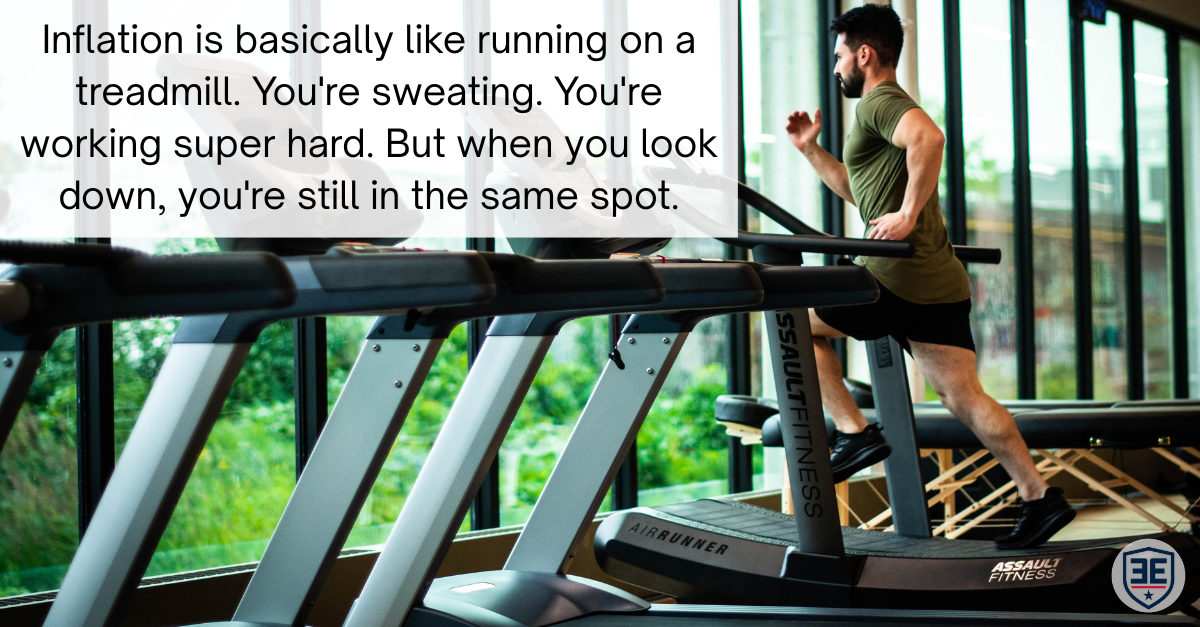
So look, let's explain inflation. Inflation is basically like running on a treadmill in layman terms. Some people are going to tell me it's more complicated than that. I know. Calm down. It's like running on a treadmill and you're sweating, you're working super hard, but when you look down, you're still in the same spot. The only difference is now your complimentary water bottle from the water station at the gym is now $6 and it's packaged in a bottle. That’s what Australia has been doing for the last 17 years that I've lived here. Well, I wanted to point that out. I'm using 17 years, because I measured from when I first got to Australia. Prices had moved 60-70% since I got here - prices of literally everything. See, back in 2007 when I landed here, I was 15-years-old, a $10 burger meal was a whole meal for $10. You could get an entire meal for $10. Yeah, $10. I'm not even talking Maccas. Like a proper meal for $10. Today, it's now $17. And Sydney, well, they sell it for $22, but don't worry, they call it fusion cuisine.

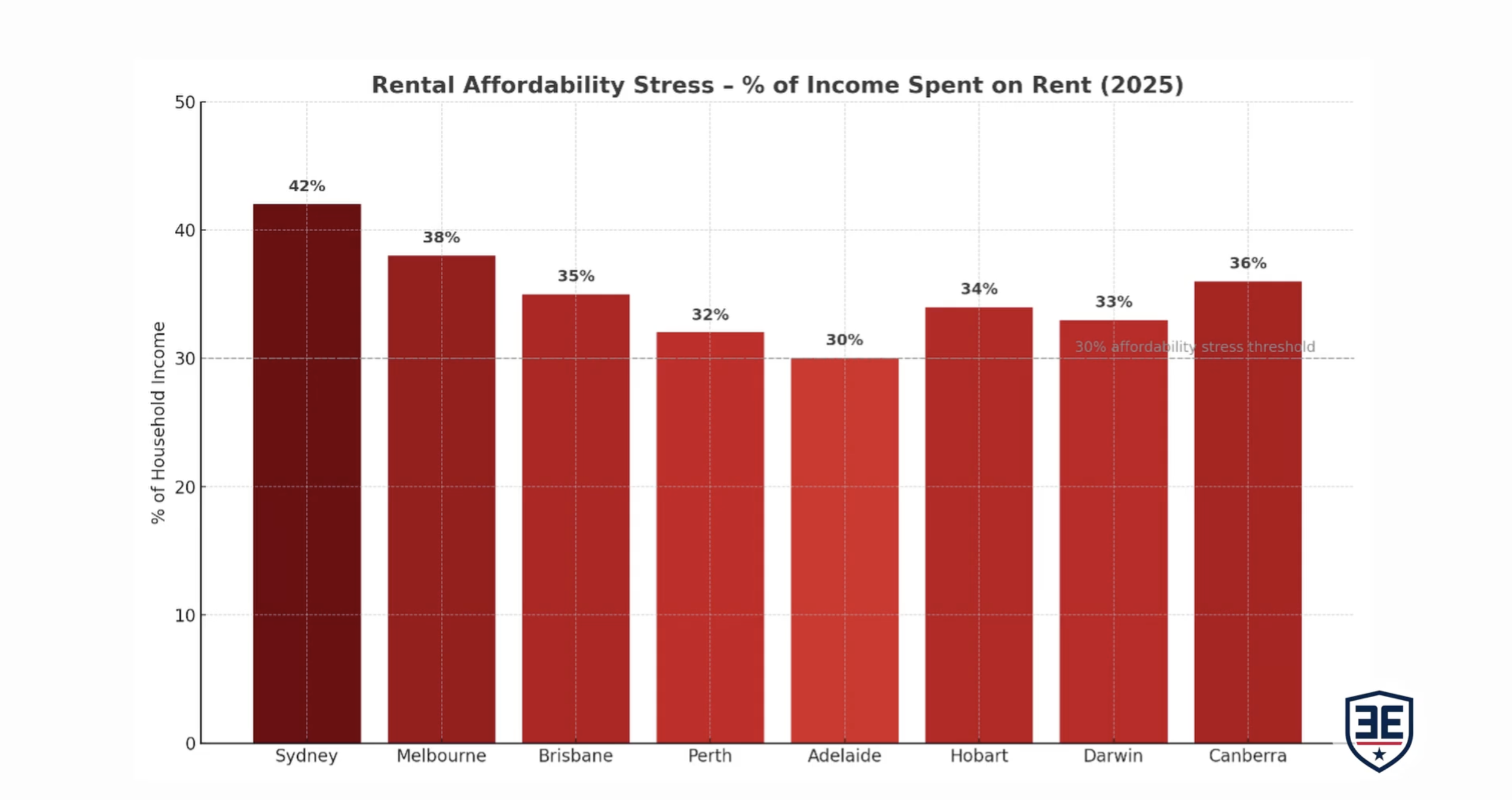
When I landed in 2007, I was a teenager with big dreams and, well, questionable fashion choices. I say that because I looked at a picture recently and I thought, "Oh, you've come a long way, man." Back then, you could rent a share house with your mates and still afford pizza on Friday night. My single mom raised me and two other boys, so three boys, on about $750 a fortnight from that point in 2007. She was able to pay rent. She was able to buy groceries. She was able to pay the bills. She was able to buy fuel and still somehow managed to send money for my family back in Africa - yeah, that's a thing. Anyway, moving on - fast forward to today. $750 covers a week's rent in the back of nowhere often. And if that's not where you are at right now, don't worry. You'll get there. If you think I'm joking, jump on realestate.com.au and you will find that $750 will pretty much cover a week's rent. Migration boomed.

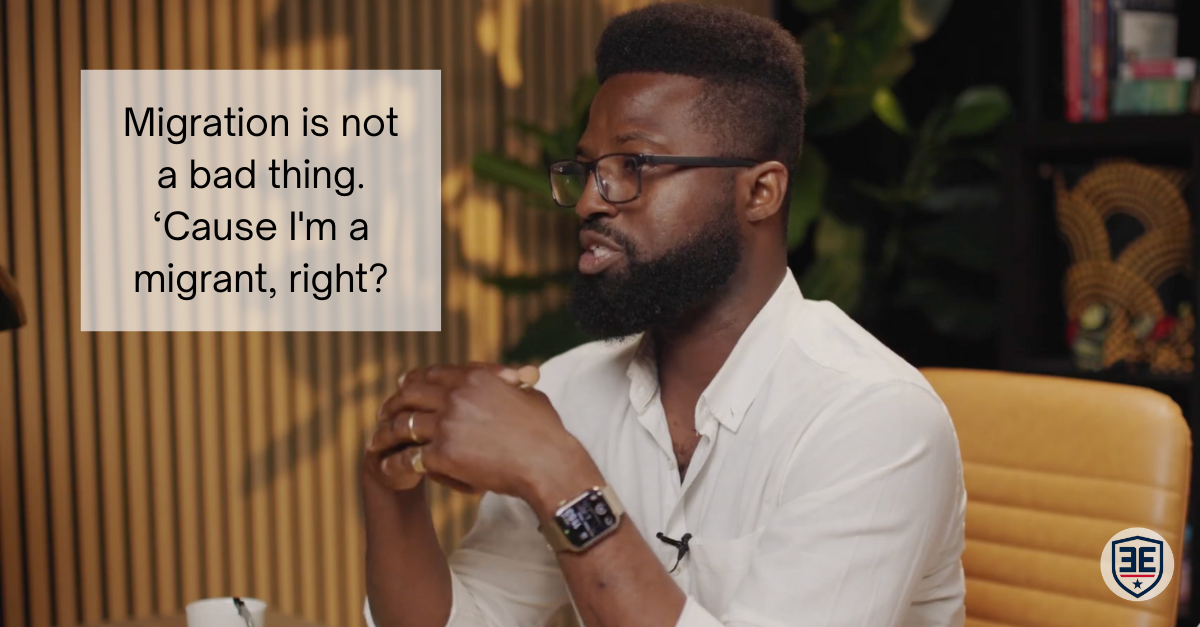
And let's just pause here for a second on the whole conversation of migration. Migration is not a bad thing. ‘Cause I'm a migrant, right? And I am so grateful that the opportunities that have happened have led me to be in Australia. Which is by the way why I'm really passionate about what I'm doing here and why I want to see better for us. But the problem is that if migration is not properly planned, then it is really, really bad. And what we are seeing and what we have a lot of people saying (even though that they've been shut down for whatever reason), is that it has been poorly planned and poorly managed.

Now remember, I talked about distraction before (when they're doing something in the background and they do something else to distract you, because they think you won't know any better.) Yeah. That's kind of what's happening with the whole migration thing. That's where we're at.

But let me tell you what the fundamental problem with migration is. Housing supply hasn't changed. It hasn't boomed. Because if migration booms, then housing supply should boom. And this is why. Where it all connects and why it is a problem. Now, if you haven't noticed lately, you've got five people beating for the same dodgy studio with mold in the ceilings. It's not a rental market anymore. It's a Survivor’s series (or at least that's what it looks like to me). The real estate edition.

I turned up to an auction the other day, and there were so many people there and it was a relatively nice house, but it's an average suburb. It was a nice house: small house, tiny rooms, and it sold for like $800,000 at the auction. Now, this is part of our problem, right?

You see the Reserve Bank. Bless. Bles them. Bless their good souls. Their one move is always the same: to raise the interest rates. They're like a DJ with only one track. Interest rate up, up, and up again. Okay. Well, maybe it does come down a touch every so often if you clap loud enough. You remember back in (I don't know, maybe) January, where like everybody was like, "What the heck are you doing? The interest rate is too high. We're all drowning.”

“All right. All right. We'll bring it down.”

Meanwhile, the landlords are gasping for air as their repayments can go up 10 times a year, by the way. For those rentals who don't get that, this is actually the struggle: your landlord's repayment can go up 10 times a year. Legally, it can. It's called the RVA. But legally, they can only put their rent up one time a year. That's like going to the gym and then doing 10 squats and being told to only breathe once. Make it make sense. So the landlords panic (like they should). Because I can't really swim all that well, but if I was in water for that long and you tell me to only breathe once, I will panic. Like you should. Like anyone would if they were underwater. Now who is in pain? It's the tenants. It's always the tenants.

Here is where it gets perhaps sneaky because a lot of our bills are pegged to CPI. That's the consumer price index. When rent climbs, CPI rises, right? And remember why rent is climbing? Rent is climbing because there is a higher demand for properties that don't really exist, right? Because all these renters want a new house. Because the RBA continues to increase interest rates. Because it seems like that's their one kind of swing thing that they have. But when rent climbs, CPI rises. Now that means your bus fair, your power bill, your rejo, and half a dozen other things that you don't control and you can't control, government charges, they all go up too. It's the same bus. The same power poles. The same pretty much everything. The same guy reheating his tuna in the morning on your commute to work, sitting right next to you on the train. But somehow your wallet is lighter. So nothing has fundamentally changed, but you keep getting charged more.

That's not economics by the way. Let me explain to you what that is, very simple; that's called lazy indexation. And your government, the one you elected to serve you, that we also pay a lot of money so that it can be responsible - for the mess that they continue to create.

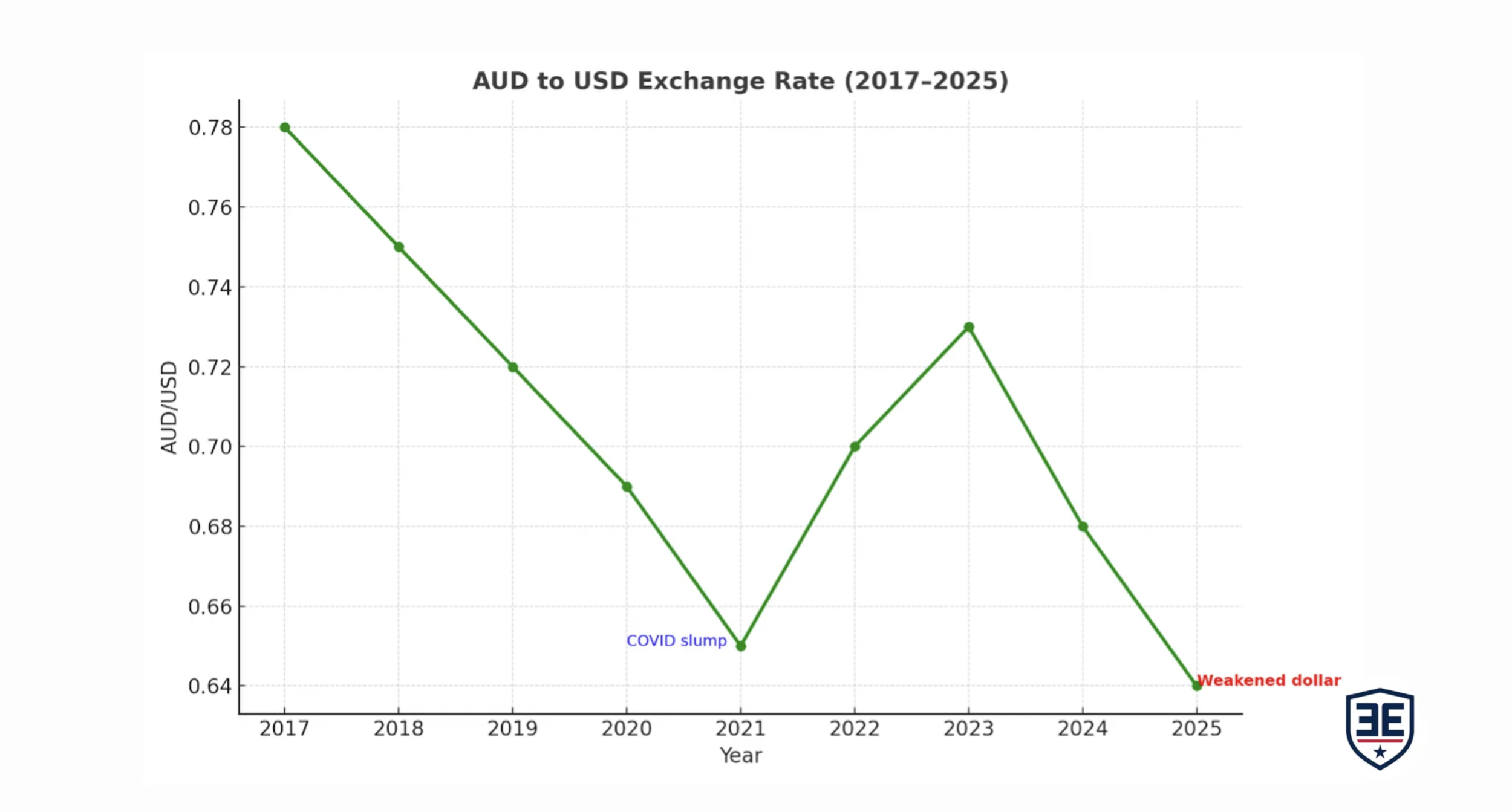
And then there's the Aussie dollar that's constantly dropping against the USD. You might think, “well, I'm not going to Disneyland anytime soon, and so who cares?” Ah, but here's the kicker. Almost everything we buy is linked to the US dollar. If you didn't know that, now you know that. You can go and educate yourself and read about this further. But let me give you some education while you're here. When our dollar is weak, our import cost goes up. That means the fuel at the servo is now more expensive. Groceries on the shelf are, well, also more expensive. Trades’ materials to build these buildings become more expensive. So when the dollar drops every day (which for a period of time they just seem to be dropping literally every day), everyday life for you will cost more. You don't need to fly to America to feel it. You feel it literally every time you fill up your car. Every time you buy groceries. Every time you call the trady, plumber, electrician to come and fix something in your house. Every time you buy a Starbucks latte. Every time your bank statement shows up and there are all these extra charges. Yeah, they're included in the mess as well. In fact, they're usually part of the problem. You know when you look at your bank statement and you bought a coffee at Starbucks and you think, “Geez, did I just make a down payment for a new Tesla?” (or maybe that's just me, so maybe poor example.) The dollar is literally a mirror of how the country is being managed and right now it's reflecting our bad habits: high inflation, weak productivity, and governments pretending indexation somehow equals growth.

Here's what really gets me angry. None of this is actually inevitable. You see, Dubai pumps out 9,000 plus new apartments in one quarter. Singapore, well, they regulate rents so tenants get stability. Germany, they give renters 5-10 years of security. So these demands can be controlled. The ups and the downs of it can be regulated a little bit more.

Meanwhile, Australia pats itself on the back when it promises to deliver 1.2 million homes by 2029. Sounds good, right? Ah, except there is no road map. There is no plan for the trade shortage that we have. We literally don't have enough trades to actually do this work that they're saying will be done. No fixing building cost. It's like saying, “Don't worry. We know that your car is broken. We'll fix it in 4 years. Just walk to work every day until we find the parts later to fix the problem.” So, how the heck are you going to promise to deliver 1.2 million houses by 2029 when you haven't fixed the fundamental problems that needs to be fixed first in order to actually deliver on what you're saying you can deliver on? I mean, what nonsense!

This is where my philosophy comes in. Education, enlightenment, and empowerment. You see, education is understanding how policies trap us in a doom loop like the one we're in. Enlightenment is thinking for ourselves - not swallowing whatever the government is spinning so that you can look away and be distracted. And then empowerment, well, that's the action pass. Push back. Demand the reforms that need to take place to see actual change. Because if we don't, our kids will be paying $2 million for a two-bedroom unit and then we will call that starter housing. They'll be lucky if they're not living in a bloody caravan by the time it is their turn to be buying houses. Okay, maybe I'm exaggerating a little. Or am I? Am I though? Because I think it is a very near possibility.

So, here's the thing: next time you hear about inflation or indexation, don't switch off. Connect the dots. Let's ask why leaders keep choosing the same lazy way out. This treadmill is only moving because we keep running on it and it's time to step off. Demand a new machine. They need to build a system that works for the people. Not just the politicians and their powerful friends or their bloody pockets. Not just the property developers or the banks that continue to get rich off the hardwork of our people. But a system for the people that elected them to serve.

Now, before I close, let me set the record straight.

When I placed out the apology video, I did it for one reason, because people were hurt. Not because I was concerned about the PR pressures that were coming my way, and definitely not because some I was doing some kind of damage control, but the labels came anyway. They said I was hollow, I was doing some kind of a PR spin, it wasn't heartfelt enough, even that I was an unsafe leader.

Well, screw you. I don't give a flying toss what you think.

Let me be clear: I apologized because words can wound and when they do, the right thing to do is to acknowledge it. That's not weakness. That's called humanity. That is leadership.

Here's the problem with you loud minority leftist illiterates: some of you don't want an apology. You want compliance. You don't want accountability. You want surrender. And if we don't give it to you, you will smear us. You will twist our words and the intent behind them. You will try to bully us into some kind of silence.

Well, let me tell you something: I do not bend to stupidity. I don't bow to bullies. Never have. Never will. And don't confuse my leadership for people-pleasing. My convictions haven't changed and it just won't, because convictions don't collapse under pressure. True leadership isn't about echoing whatever keeps you liked; it's about standing even when standing costs you like I said before.

Now let me tie this back to my philosophy. The social ease that I will be advocating on or rather for on this platform as it goes on is these three things: Education, enlightenment, and empowerment. Education to understand the real forces at play, enlightenment to think for ourselves and not to just swallow whatever headline is thrown at you passively, and empowerment, the courage to act without fear.

What's happening here is proof of why those Es matter. We live in a culture where empathy is treated as weakness and remorse is rejected unless it comes with some kind of surrender. That's not progress. That's fragility dressed up as some kind of virtue. So here's my commitment: I will keep educating, I will keep speaking truth that enlightens, and I will keep empowering people to stand, to think, and to act, even when it is unpopular. Because at the end, that's the only way we (and I do say we) will build communities that actually work.

Never confuse my apology for compromise. Apologies about empathy and conviction is about strength and real leaders need both.

And if you think a few comments or headlines will silence me, then you've missed the entire point and that is on you.

I'm Emeka and this is Emeka Unscripted. That's it for our episode today. Godspeed.

Deepen your education on Patreon

Related articles:

Previous
Previous

Fired for Telling the Truth: Australia’s War on Doctors, Faith & Free Speech - E3

Next
Next

Authenticity Under Fire: The Viral Controversy That Sparked Emeka Unscripted - E1